
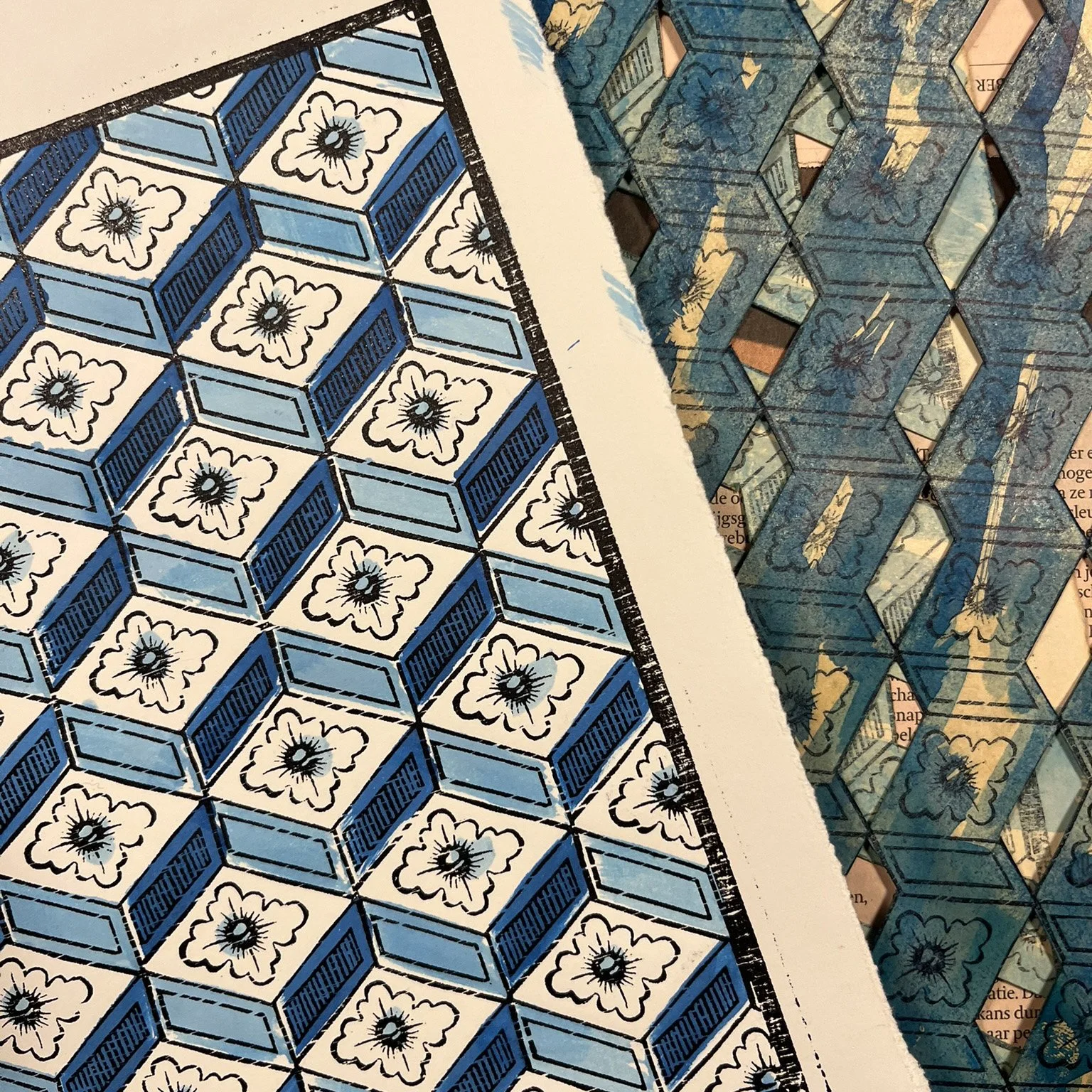
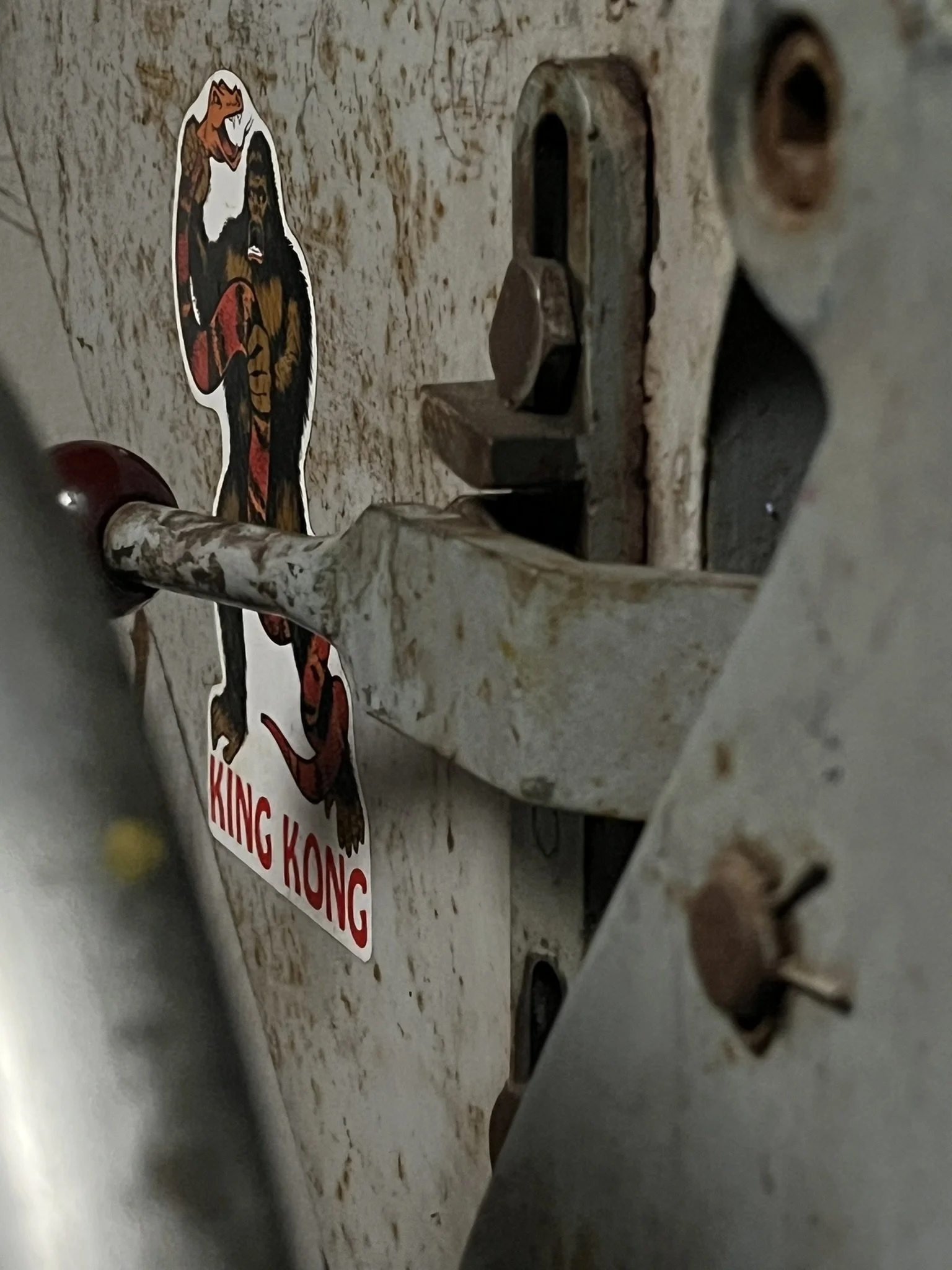
Before wallpaper existed as we know it, there was dominoté. Hand-printed sheets, sold by the page, made across Belgium from Antwerp to Tournai. We still make them, with a press we call King Kong, two homemade inks, and wood stamps treated with shellac.
The original wallpaper.
Dominoté
Origins
16th century · Belgium & beyond
Where it came from
Antwerp · Tournai
Made across Belgium · 16th century onward
England
Earliest wallpaper made by a Flemish printer
Sint-Maria-Latem
Still made here · Still by hand
Before wallpaper,
as we know it;
there was dominoté.
Dominoté, small decorative sheets, hand-printed and sold by the page, predates wallpaper as we know it. It was made across Europe from the 16th century, and Belgium was at the heart of it.
From Antwerp to Tournai, makers printed decorative sheets for rooms, for books, for any surface that deserved a little ornament. The technique was simple in principle and demanding in practice: carved wood, ink made by hand, one impression at a time.
The Flemish connection to the history of wallpaper runs deeper than Belgium alone. The earliest known English wallpaper was made by a printer from Flanders working in England,carrying the same tradition, the same materials, the same practice across the Channel. That is how far this craft travelled, and how central Flemish printmakers were to it.
Today the dominoté tradition survives in very few places. We make ours on King Kong, a vintage proofing press, with two inks we make ourselves, following recipes that go back centuries.
The ink recipe
The recipe for our outline ink comes from Christopher Plantin, the great Antwerp printer of the 16th century, whose printing house became the Plantin-Moretus Museum, a UNESCO World Heritage site. We found the recipe in a book and reproduced it in the atelier. Linseed oil-based, rich, and as close to the original as we can make it.
How it's made
Two inks. One press.
Everything by hand.
01
The stamps
Wood · Laser or hand carved · Shellac
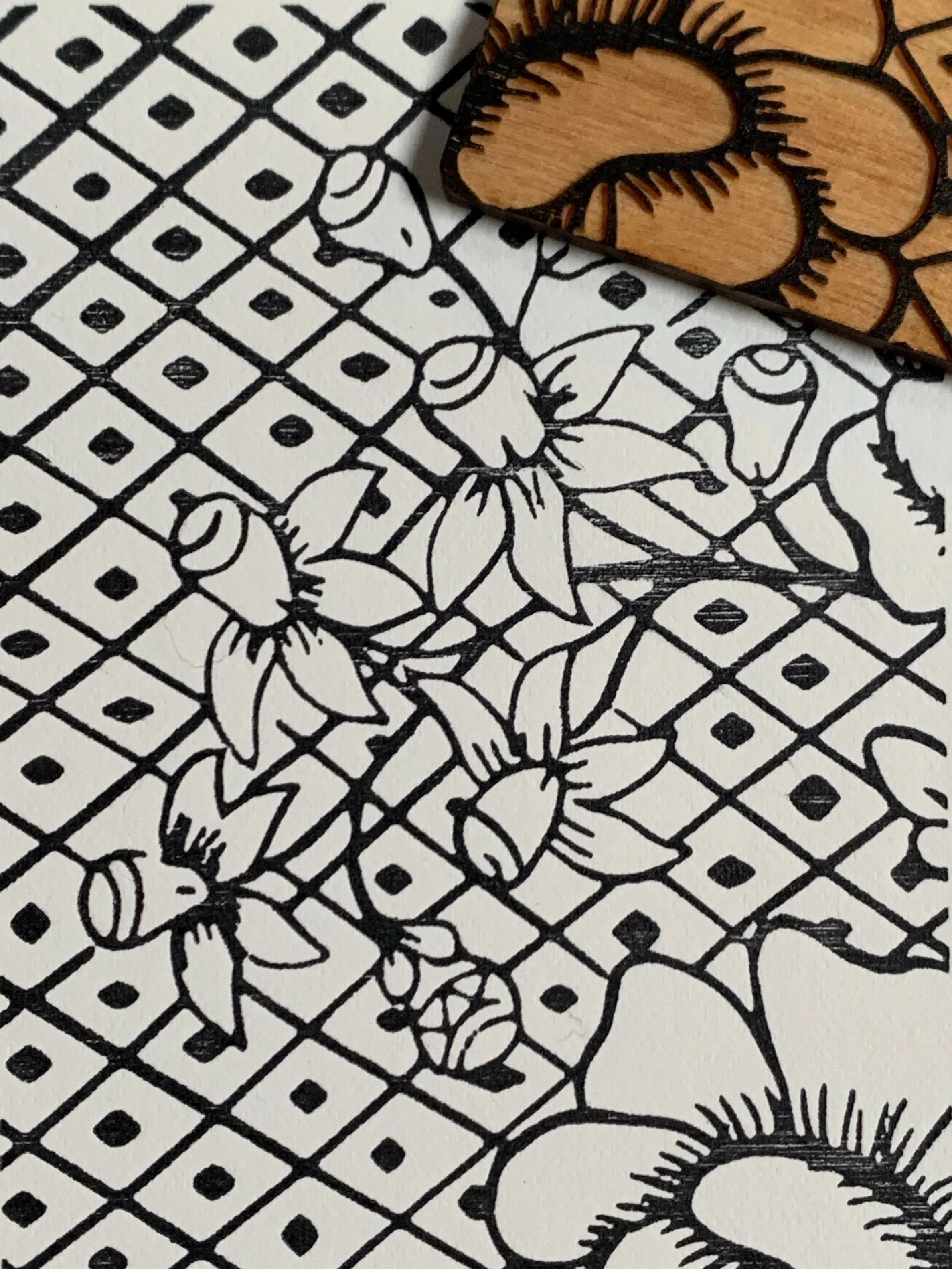
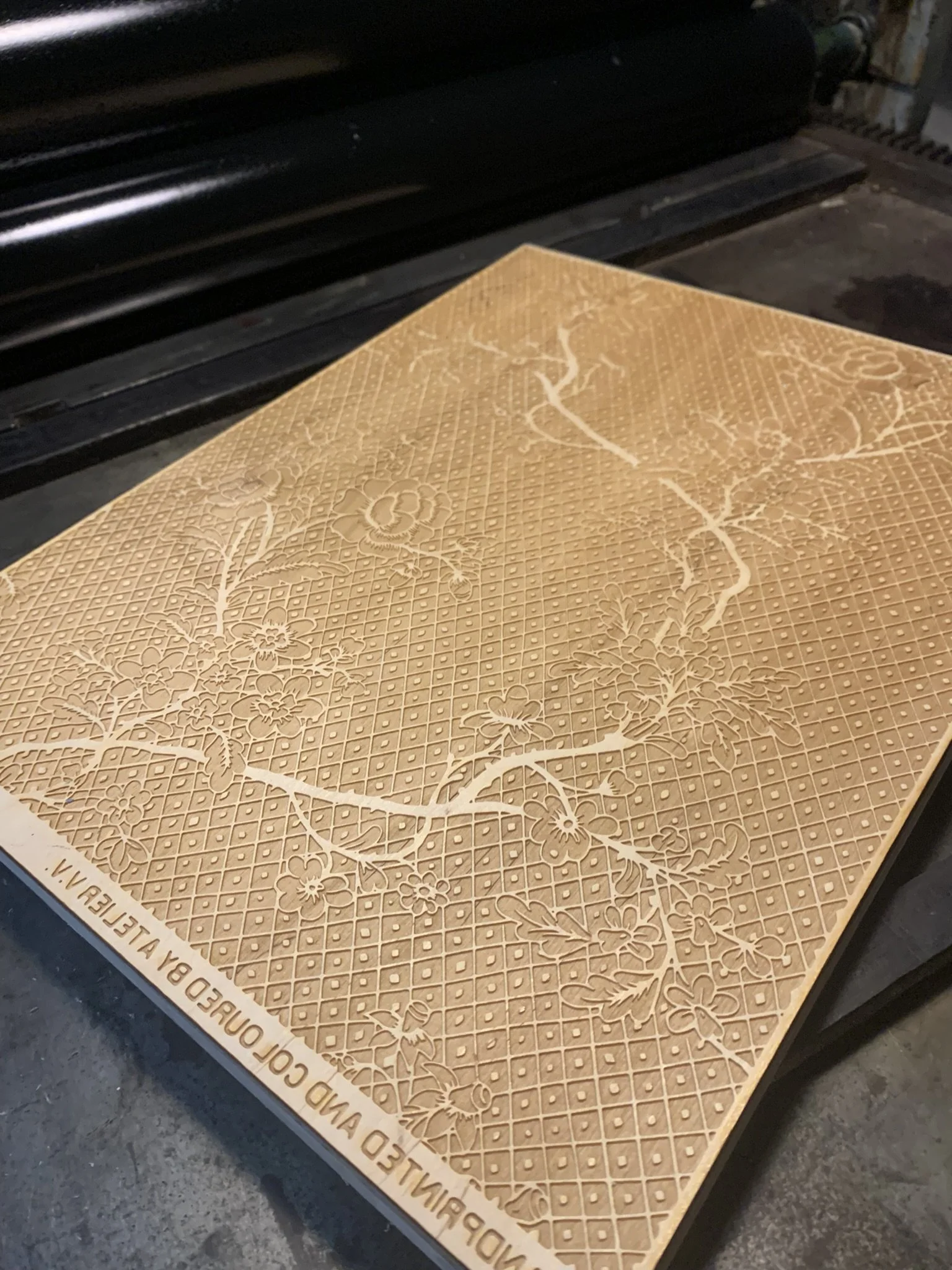
Every dominoté begins with a carved wood stamp. Always wood. Cut by laser, by hand, or a combination, depending on the complexity of the design.
Once carved, each stamp is treated with multiple layers of shellac varnish, a natural resin that hardens the surface, seals the grain, and ensures the ink releases cleanly onto the paper with every impression. The shellac treatment takes as long as the carving. It is not skipped.
The stencils used for adding colour later are treated the same way, shellac on wood, every time.
02
The outline ink
Vine black · Linseed oil · Turpentine
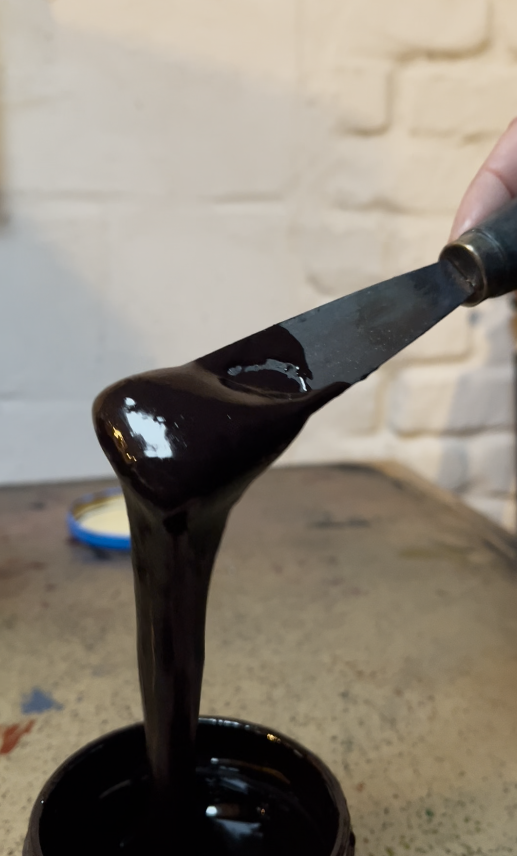
The ink for the outlines is made here, from scratch, following a recipe that goes back to Christopher Plantin, the great 16th century Antwerp printer.
We found the recipe in a book and reproduced it. Three ingredients, in the right proportions, combined and worked until they behave correctly. The vine black gives the outline its depth. The linseed oil carries it. The turpentine adjusts the body of the ink for the press.
03
Printing the outlines
King Kong · Manual printing · One sheet at a time
The inked stamp goes through King Kong. One sheet. One pull. Completely manual.
The ink rollers on King Kong have an electric motor — they turn automatically to keep the ink even. Everything else is done by hand: feeding the paper, guiding the impression, lifting the sheet, examining the result.
The printing is slow and deliberate. Each sheet is checked before the next begins. There is no other way to work with this kind of press — and no better way to make this kind of object.
04
The colour ink
Gum arabic · Non-toxic pigments · Water-based
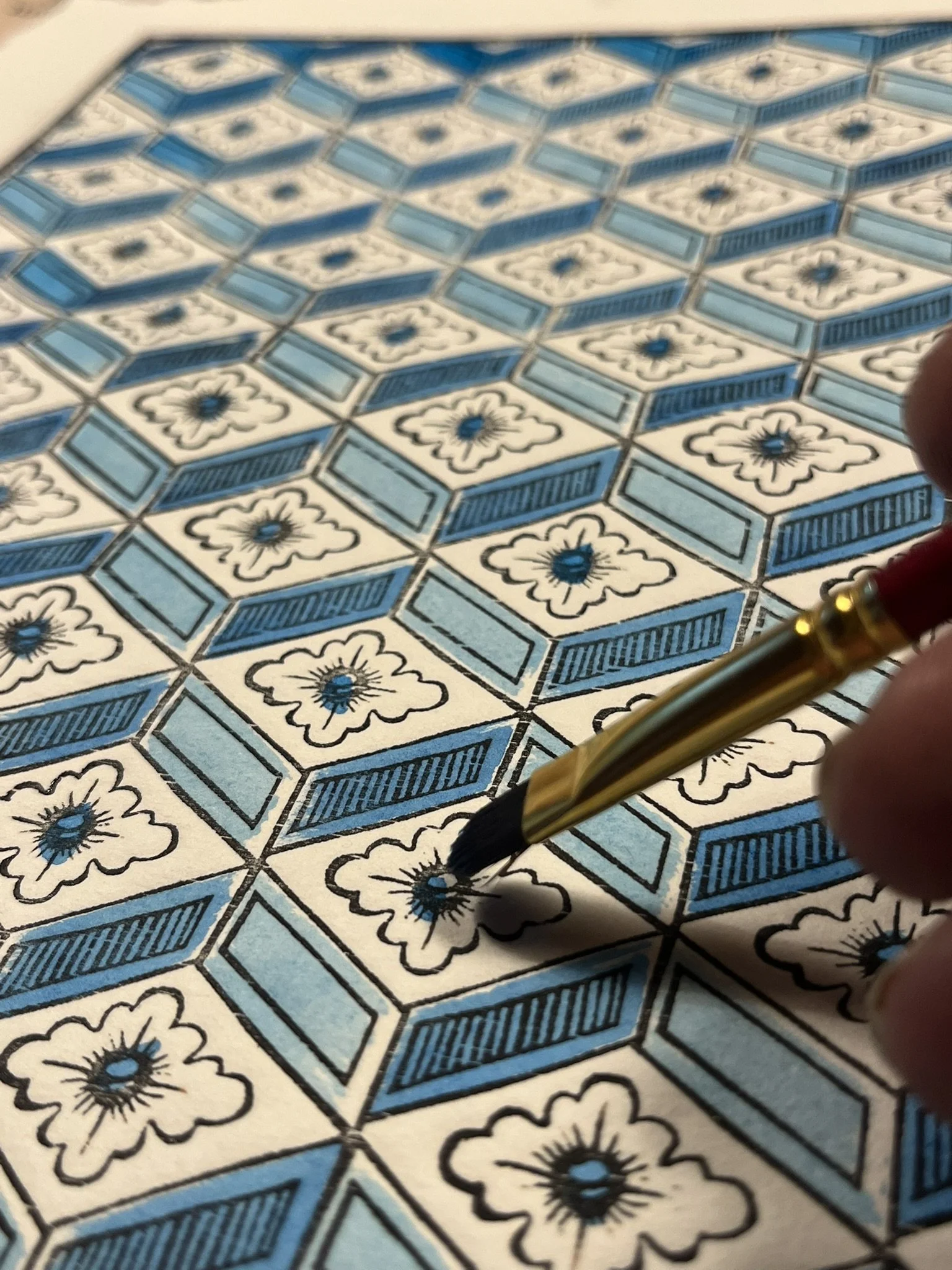
Once the outlines are dry, colour is added. With a completely different ink, water-based, made from gum arabic and non-toxic pigments.
Gum arabic is one of the oldest binding agents in printing, a natural resin dissolved in water that carries pigment cleanly onto paper and dries to a matte, slightly luminous surface. It has been used in printing since the medieval period. It is non-toxic, water-soluble, and reversible.
The pigments are the same palette we use across all our work, earth and organic, non-toxic throughout. Mixed by hand to the colour each design requires. Typically 2 to 3 colours per sheet.
05
Adding colour
Shellac-treated stencils · Colour by colour
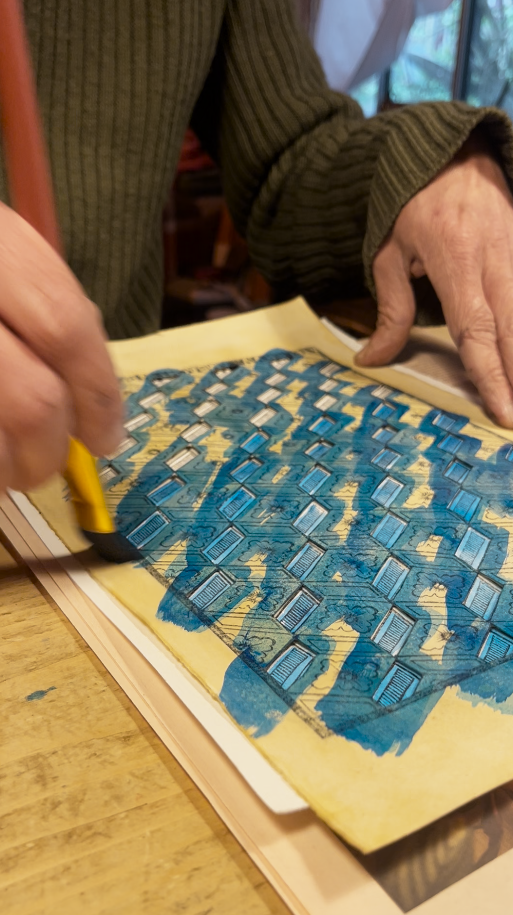
Colour is applied through paper stencils, treated with shellac just like the printing stamps.
Each colour has its own stencil. The stencil is positioned over the printed outline, the colour ink applied through it, and the sheet set aside to dry before the next colour begins. One colour at a time. The same patient rhythm as every other technique in the atelier.
The combination of vine black outline and gum arabic colour gives the finished dominoté its particular character, the outline crisp and rich, the colour luminous and slightly transparent. The two inks sit differently on the paper and that difference is visible. It is one of the things that makes a dominoté immediately recognisable as handmade.
A sheet with
many lives.
Dominoté is not confined to walls. The sheet format and the quality of the print make it at home in many contexts. It is the only product we make that you can buy directly and take home the same day.
Wallpaper
Applied sheet by sheet, overlapping slightly. A room papered in dominoté has a layered, historical quality that no roll paper produces. Each sheet visible as its own object.
Framed artwork
A single sheet, framed under glass, is a piece of printed art. The pattern, the two inks, the paper, all visible in detail. Striking in pairs or small groupings.
Book covers & objects
The format was used for book endpapers and covers long before wallpaper existed. The weight of Ingres paper suits it exactly. A natural return to origins.
Any decorative project
Drawer liners, box coverings, lampshade lining, wherever a piece of hand-printed paper can do something a plain surface cannot. We're open to anything.
Ready to order
Explore the collection
Our current dominoté patterns are available to order. Each sheet is printed to order — the same pattern, but never exactly the same print twice.
Custom work
A pattern made for your project
A custom dominoté commission — pattern, colour, and quantity designed specifically for your space or project. Walls, books, objects. Tell us what you have in mind.